Make the technical and commercial picture clearer.
Energy projects need more than equipment. They need a sound basis for selection, investment and execution.
Our energy division brings together professional engineering experience and renewable-energy storage knowledge. The founder’s power-generation background informs an approach covering mechanical systems, infrastructure and the practical requirements of an operating plant.
GENERATION, STORAGE & POWER SYSTEMS
Technology for the complete energy requirement.
The energy offering combines equipment supply with engineering services to generate, store and manage electricity. System discussions consider energy demand, grid interaction, backup requirements and the operating environment.
Solar PV systems & auxiliaries
Solar panels, batteries, inverters and transformers form part of the supply scope. Selection considers the required generation output, electrical interfaces and how the proposed equipment will operate as a coordinated power system.
Engine-based power generation
Internal-combustion power-generation units can be considered for the specified generation or backup duty. Load profile, operating hours, fuel arrangements and integration with other power sources provide the basis for equipment selection.
Thermal plant parts & consumables
Spare parts and consumables for thermal power plants support planned maintenance and ongoing operation. Equipment identification, drawings and technical specifications help establish compatibility with existing plant systems.
Thermolysis energy storage plants
Thermolysis energy storage plants are included in the company’s product offering. Enquiries are assessed against the proposed application, supplier technology, site requirements and engineering scope before a solution is specified.
ENGINEERING CONSULTING
Support across the project lifecycle.
01
Consulting & advisory
Local market understanding, regulatory considerations and commercial due diligence help establish a realistic project pathway. Advisory discussions can cover tender requirements, investment risks and the commercial context for the proposed solution.
02
Commercial & feasibility studies
Test the proposed project against technical requirements and business objectives. A study may bring together engineering investigations, geotechnical assessments, environmental considerations and business-case analysis, according to the agreed scope.
03
Engineering & design
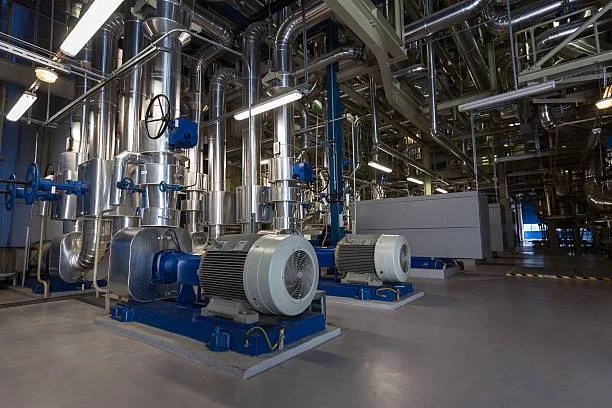
Engineering and maintenance support for pumps, valves, high-pressure and high-temperature piping, heat exchangers, HVAC and rotating equipment. Design discussions consider reliable operation, efficiency and the requirements of the wider plant.
04
Construction & project management
Planning and execution oversight connect engineering decisions with procurement, subcontractor coordination, logistics and safety management. Scope, interfaces and responsibilities are established for the project rather than assumed.
ENGINEERING PERSONNEL & EXECUTION
From system assessment to commissioning.
Energy-needs assessment and customised power-system design connect the proposed technology with the client’s operating requirements.
Ritshi’s services include evaluating the feasibility of battery-storage integration and providing qualified engineering personnel for utility-scale wind, solar PV and thermal power projects.
The service scope also includes power-plant construction and commissioning. Project-specific responsibilities, delivery interfaces and acceptance requirements are agreed around the plant and the contracted scope.
Assessing how energy is used provides the starting point for identifying practical improvements. Consumption patterns, equipment duties and operating practices can reveal opportunities to reduce cost while maintaining or improving output.
The result is a prioritised optimisation roadmap: cost-effective measures, implementation considerations and a basis for evaluating progress. Regulatory and sustainability requirements can be considered alongside the operational objectives.
Grid-scale and industrial energy storage must respond to how power is generated, consumed and exchanged with the grid.
Ritshi offers access to containerised storage and systems integrated into purpose-built structures. Technology discussions include lithium-ion and redox-flow batteries, with hydrogen considered as a separate energy-storage pathway.
Storage can be evaluated for renewable-energy integration, shifting energy between generation and demand periods, and managing industrial load profiles. Suitability depends on the site and the intended duty.
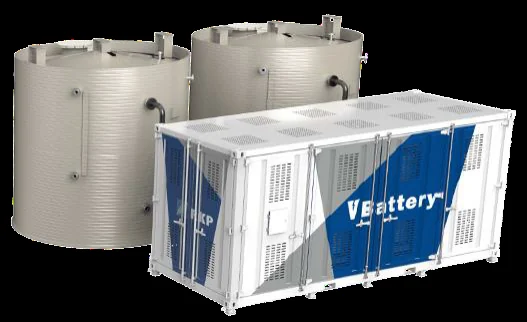
The modular arrangement described in Ritshi’s technical material combines a 20-foot (approximately 6.1 m) power container, two external electrolyte tanks, a battery-management system, pipelines and associated accessories.
Changing the external tank volume allows the electrolyte quantity, and therefore storage capacity, to be configured to the requirement. The final arrangement depends on system design, site conditions and maintenance access.
Published layout example: 10 MW / 40 MWh
Flat layout
Approximately 3,850 m²
Stacked arrangement
Approximately 2,250 m²
The original technical example includes maintenance space. These are indicative layouts, not a site-specific design or evidence of a completed Ritshi installation.
LET’S BUILD THE NEXT CONNECTION
Have an industrial, energy or infrastructure requirement?
What energy products and services can Ritshi source?
The offering includes solar PV panels, batteries, inverters and transformers; engine-based power-generation units; thermal plant parts and consumables; and energy-storage technology. Services include advisory, feasibility studies, engineering and design, energy efficiency, engineering personnel, construction and commissioning.
How is a battery energy storage system sized?
Sizing starts with generation capacity, the renewable generation profile, load requirements and required storage duration. Grid interaction, the operating strategy, available space and maintenance access also affect the system arrangement. A site-specific assessment is needed before a design is selected.
Does Ritshi offer vanadium redox flow battery solutions?
Vanadium redox flow batteries form part of the energy-storage offering. The published modular example combines a power container with external electrolyte tanks; power and storage capacity are considered separately. The 10 MW / 40 MWh example is indicative, not a completed Ritshi installation.
Can Ritshi help improve industrial energy efficiency?
Energy-efficiency work starts by assessing consumption patterns, equipment duties and operating practices. Identified opportunities can be prioritised into a practical optimisation roadmap that considers costs, implementation requirements and operational output.
What should I include in an energy project enquiry?
Include the site location, load or demand profile, existing generation, grid connection, required backup or storage duration and available space. State whether the requirement is equipment supply, engineering advice, system design or project execution.